
Tour the Grounds
Take a stroll through a historic greenspace like no other
Washington Park Arboretum contains one of the most diverse and important plant collections in North America displayed among 230 acres of woodlands, wetlands, gardens, and walking trails. Click on the headings below to learn about our major attractions.

Trail map: Download the UW Botanic Gardens Arboretum trail map. You can also pick up a printed map at the Graham Visitors Center.
Interactive map: Locate or identify plants along the trails on your smartphone using the UW Botanic Gardens Arboretum interactive map.
Free Walking Tours
Our partners at UW Botanic Gardens offer free monthly walking tours of the Arboretum on the first Thursday of each month (January through November), from 11:30 a.m. to 1 p.m. The tours are led by trained guides and focus on seasonal topics of interest and special plant collections. No registration required. Meet at the Graham Visitors Center. LEARN MORE
Attractions:
Graham Visitors Center
 Located at the north end of the Arboretum, the Graham Visitors Center was built in 1985 and was a gift from the Arboretum Foundation to the City of Seattle. Its name commemorates Donald Graham, Jr., a founding member of the Arboretum Foundation and a key figure in the creation of the Arboretum. It features an information desk, gift shop and snack bar, public restrooms, Arboretum Foundation and UW Botanic Gardens offices, and a parking lot. Wisteria Hall in the Visitors Center is a popular venue for weddings and social/business meetings.
Hours: Tuesday through Sunday, 10 a.m. to 4 p.m.
Arboretum Loop Trail
 Opened to the public in 2018, the Arboretum Loop Trail is a two-mile, bike-and-pedestrian path offering a great venue for recreation in the City. It passes through many of the Arboretum’s major attractions, such as the Magnolia Collection and the Pacific Connections Garden. Part of it runs along Arboretum Creek and a newly restored wetlands. It also increases accessibility to previously hidden parts of the Arboretum, such as the prized Viburnum Collection. You can access the trail from many points in the Arboretum, including the Graham Visitors Center.
Azalea Way
 The Arboretum’s most iconic attraction, Azalea Way is a ¾-mile-long, level promenade running through the heart of the Arboretum. It features azaleas, flowering cherries, dogwoods, magnolias and companion plants, set against a backdrop of evergreen trees. Azalea Way was developed in the late 1930s (from a former horse-race track) and is a key component of the Arboretum’s original Olmsted Brothers design. Seattleites flock to Azalea Way on Mother’s Day each year to admire the azaleas in peak bloom.
Enjoy a virtual tour of Azalea Way.
Pacific Connections Garden
 Immerse yourself in forests of the Pacific Rim without having to leave Seattle! Located at the south end of the Arboretum, the Pacific Connections Garden is a unique ecogeographic display tying together five Pacific Rim regions with similar climates: Cascadia, Chile, New Zealand, Australia, and China. Marvel at the diversity of plants from these regions that thrive in the Northwest, such as monkey puzzle trees from Chile, giant Himalayan lilies from China, gum trees from Australia, flaxes from New Zealand. Tour the gardens and learn about the vital importance of plants in different societies and ecosystems. More details.
Seattle Japanese Garden
 The Seattle Japanese Garden (photo courtesy Aurora Santiago) at the south end of Washington Park Arboretum is one of the most celebrated Japanese gardens outside of Japan. It features a formal stroll-through garden at the north end and an informal, naturalistic woodland at the south end. These are connected by a semi-formal area in the center featuring a lake, wooden zigzag bridge, and stone peninsula. Learn more.
Waterfront Trail
 One of the most popular walking trails in the city, the Arboretum Waterfront Trail is a 1.2-mile path connecting Foster Island and Marsh Island to the mainland in the wetlands of the Arboretum. Partially comprised of floating boardwalks, the trail affords spectacular views of Union Bay and Lake Washington and is hugely popular with nature enthusiasts who come to see the ducks, wading birds, raptors, beavers, river otters, and more that make their home in the wetlands. The city is working on plans to renovate and improve large sections of the trail, which was originally built in 1972. Learn more about the renovation project.
Witt Winter Garden
 Just a short stroll from the Visitors Center, the Winter Garden is a must-see for all nature lovers. Set in a clearing surrounded by tall, native conifers, the garden features a range of woodland plants that peak in interest at a time of year when most gardens are dormant or subdued. These include plants that bloom in winter, boast colorful winter foliage or bark, produce winter fragrance, or offer unique textures for late-season interest. Originally dating to 1945—and re-dedicated in 1988 in memory of legendary Arboretum curator Joe Witt—the garden is filled with fragrant witch-hazels and daphne, flowering camellias and mahonias, beautifully barked birches, and much more.
Woodland Garden
 A short walk along Azalea Way from the Visitors Center is the Woodland Garden, a small, serene valley framed by tall native conifers showcasing the Arboretum’s prized collection of Japanese maples (more than 70 varieties). The best time to visit is in the fall, when the maple foliage is ablaze with color. However, there are delights to behold at all times of year, such as the fothergilla and hellebores blooming in spring and the oakleaf hydrangeas flowering in summer. Two small ponds connected by a seasonal stream complete the serenity.

Notable Plant Collections
 Washington Park Arboretum is renowned for many of its core collections, including azaleas, camellias, hybrid rhododendrons, Japanese maples, and mountain ash. Its collections of magnolias, oaks, hollies, and Asian maples are nationally accredited by the American Public Gardens Association. To learn more, visit the website of our partner at UW Botanic Gardens, which owns and curates the collections.
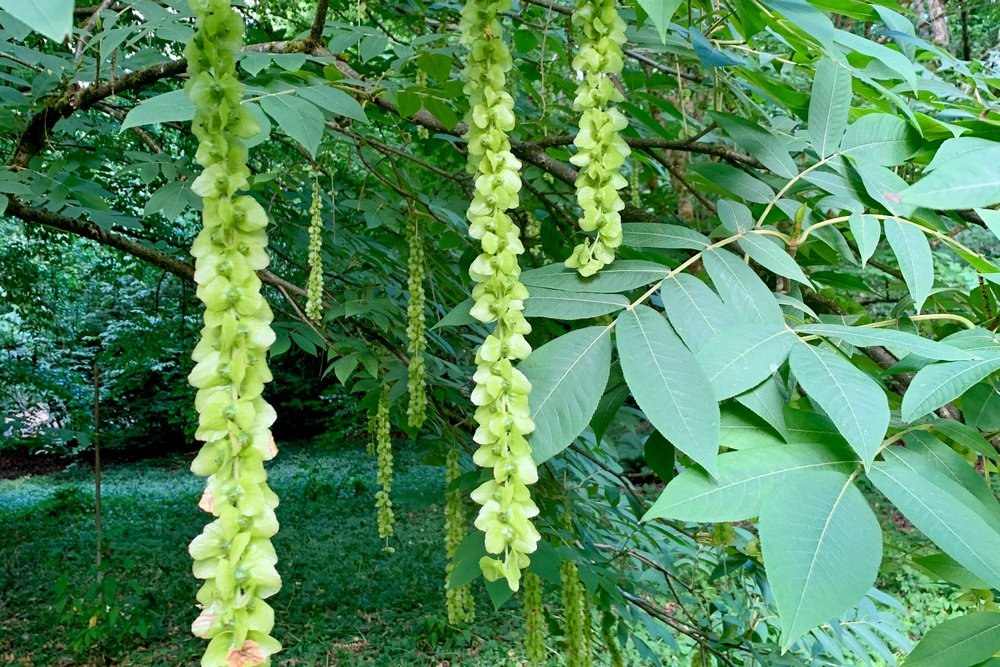
Conservation Corner: Large-Winged Wingnut
The winged fruits of Pterocarya macroptera maturing in summer. (Photo by Niall Dunne)BY CHRISTINA PFEIFFER Quietly tucked away in the Arboretum’s old field nursery, on the south side of Crabapple Meadow, a stately specimen of Pterocarya macroptera holds court amid a...
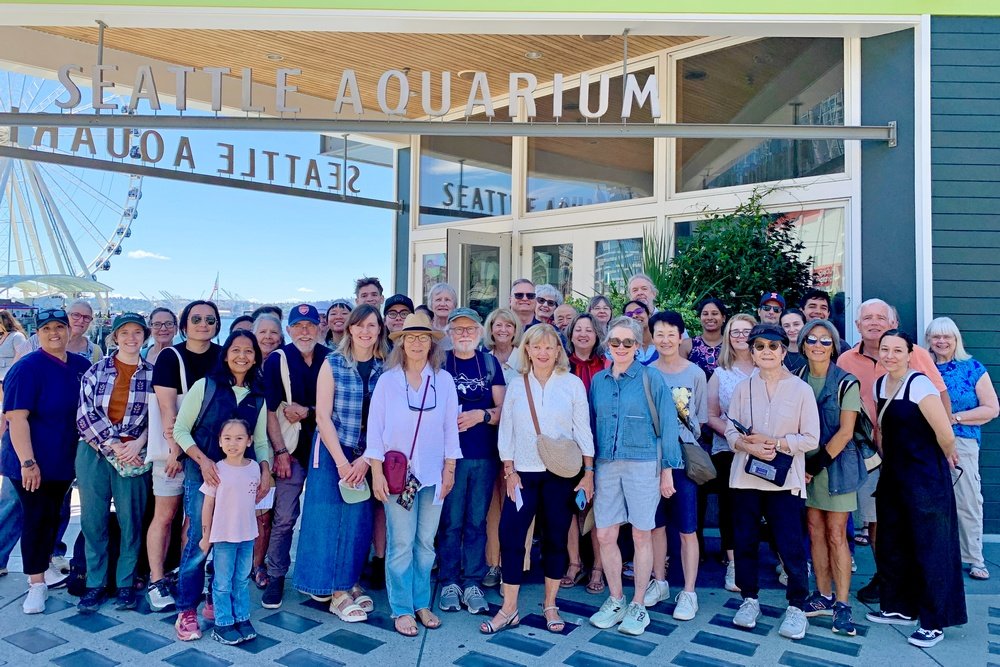
Volunteers Enjoy Field Trip to the Seattle Aquarium
BY ALICIA HAMILTON In late July, 40 volunteers from the Washington Park Arboretum, Center for Urban Horticulture, and the Seattle Japanese Garden enjoyed a special free outing to the Seattle Aquarium. For some, it was their first visit to the Aquarium in decades, and...

Japanese Garden Reopening Soon as Master Stonemason Set to Arrive
Workers placing a protective barrier around the Japanese Garden's prized Yamasaki Pine, prior to removal of the old wall. (Photo by Jared Ridabock)The Ishigaki Wall and Accessible Pathway project at the Seattle Japanese Garden is proceeding apace. Earlier this month,...
“We love the Arboretum and are so grateful for its presence in our community. Thank you to all of the staff who work so hard to make it a wonderful oasis in the city. We are so grateful.”
—W&B